
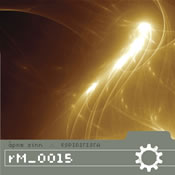
 The phrase “Åpne Sinn,” I am told, is Norwegian for “open mind.” It’s an appropriate choice of moniker for musician Geoff Small, given the diversity of style on his excellent debut, Espiritista. As the disc flows along, Small shows something of a chameleonic adaptability, working cool ambient flows and uptempo constructs with equal ease. He starts off by weaving a mesh of barbed sound in the title track, then reaches in to slowly extract long, breathy drifts that he balances against the noise. The feel is of starting from a point of chaos (the world, essentially), being brought to a place of meditative calm, and then coming back out. And just when you think you’ve got a handle on Åpne Sinn’s approach, he drops in the beat and bass pulse of “Advaita,” which may be my favorite track here. In this I hear a memory of Oldfield’s “Songs of Distant Earth” melded with an Enigma-esque groove. And it takes me over from the beginning. This track not only has funk, it’s got depth, something else Small is good at creating. All these pieces have a great sense of sonic dimension. Small’s beat-based offerings are just straight-up fun to get into. “Twinewheel” throbs its way along on energetic, rubbery chords; “Slowdive” goes straight to my analog-lovin’ heart with mid-tempo Berlin-style sequencer lines and that wonderful, geometrically precise sense of meter. That being said, I have to admit that Small’s drifts may be my preferred side of Åpne Sinn. There’s no way to avoid losing six and a half minutes to “Freefall,” but you’ll give them up gladly to Small’s ethereal, perfectly layered sounds. The closer, “Arclight,” is 15 minutes of classic slow-chord, cloudflow ambient that carries echoes of “Early Man”-era Roach. There’s a subtle touch of rainstick throughout (if I hear correctly) that beautifully grounds the piece for me. It’s a simple touch that Small manages to make important. A great track, and surely the right one on which to end!
Espiritista is another rock-solid release from Relaxed Machinery and I feel that Åpne Sinn will quickly evolve into an artist to keep an ear on. This is a superb first effort that simply gleams with potential.
Available from Relaxed Machinery.

 Calmness comes in the wake of starting flutist Ann Licater’s “Doorway to A Dream.” It comes quickly, envelops you completely, and stays until well after the disc is done. Licater’s souful flute songs, the majority of which take their cue from Native American music, arc, soar and drift. A diversity of sound comes from her array of instruments; Licater breathes her dreams into life with Native American flutes, Anasazi flutes, Chinese xiao, silver alto and more. She also enlists the help of musicians who bring their own touches to many of the 14 pieces here. Troy Arnett’s piano, by turns delicate and strong, buffets Licater’s playing on “Earth and Sky” while Jose Neto’s electric sitar finds moments in which to brings a soul-stirring edge to the flow. Guitarist Shambhu softly augments Licater on the airy madrigal “Angel Bird.” Peter Phippen’s shakuhachi dances playfully with her on “Divine Love.” And because you can never have enough flugelhorn, Jeff Oster brings his in to add a second subtle breath to “Radiance.”
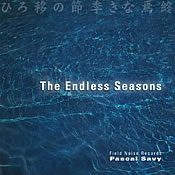 Understatement is the hallmark of Pascal Savy’s ambient work. Filled with an underlying hush, there is never any hurry, no edges or harsh angles, and yet for all the quiet subtlety there is always quite a lot going on. His latest release, The Endless Seasons, lets you know from the first note of “Watching Dew” that this outing is going to be another soft drift that will take you briefly out of the timestream. Twinkling notes like the glimmer of sunlight on morning grass carry it along, never disturbing the peace of this imagined dawn. Savy moves us meditatively through his landscape, a place that is calm–but calm in the same way that if you take time to stand or sit quietly, you still hear life moving around you. Distant, small, sometimes indecipherable, but all part of the complete living moment. Here in Savy’s work it comes as faint hisses, clanks and clicks–listen to the way it rises up like some steam-powered thing on “In Fading Light,” rubbing against foggy chords. Savy pays a lot of attention to the sense of distance in sound,which helps to create a sort of shadowbox feel to the work. But it’s a deep shadowbox, the diorama inside including little things we might not notice at first glance, but which are integral to the overall effect.
 Such is the case with Dan Pound. Upon first listening to his 2010 release, Interlace, my initial reaction was, “Why haven’t I heard of this guy before?” Then I went to his web site and saw the list of about 35 releases and I felt even more like a dummy. With that first listen, however, Pound launched into my consciousness as an artist to whom I needed to pay attention.
 When you call yourself “The Mourning Dimension,” have a Reaper-like gent on the cover of your CD and you’re NOT a heavy metal band, I think I can safely go into the listening experience with a few expectations. Has Opened hits all the right dark ambient tropes: long, groaning minor chords, rushes of nightwind, and an overarching sense of ill-being. Thing is, Has Opened comes off as more accessible than a lot of dark ambient I’ve been listening to. While certainly dense and suitably depressing in spots, it never quite hits the sense of attempted alienation that defines much isolationist ambient music. For lack of a better term, call this “somber ambient.” The top piece here is “In The Dark Residence of Evil,” where hammer-drop chords slowly stalk the listener; between blows an insectile skitter of percussion tracks across your brain. Dark as dusk and packed with consider-your-own-mortality seriousness, Has Opened is a good listen for those who take their music grim.
 Headphones on, please. With his new release, stones/still, Collin Thomas offers up a suite of five subtle works that pair field recordings with minimalist piano and droney washes. The field recordings, made in cemeteries, are for the most part static. They are what you’d hear if you stood in one spot for a while. But within the static are the quiet ripples of life–a plane whooshes overhead; birds sing; wind rustles. In the midst of it Thomas plays his piano a patient note or two at a time, pulling time longer, making a moment wait to be done. Electronic warbles fill semi-empty spaces. Overall the sense is of being nowhere important, with nowhere important to be; you are here, and that’s enough. Stay while the moments form. Listen to what moves around you. stones/still is a superb ambient CD, embracing the compositional potential of silence and negative space in order to enhance the sounds that come to fill it.
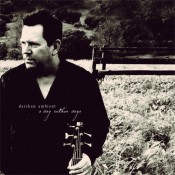 By now you’ve no doubt seen this title turn up on a lot of “Best of 2010” lists around the New Age/ambient community. There’s a very good reason for this. It’s an amazing CD. Darshan Ambient (aka Michael Allison) has a true gift for creating works thick with emotion, built on diverse instrumentation, each piece vivid, image-filled and beautifully crafted. A Day Within Days presents Allison at the top of his game right from the start, setting the bar high for any future endeavors. “Talking Book” starts the disc off strong, building up from a simple piano melody, adding sounds bit by bit, growing to a guitar-fueled mid-point and then easing back down to complete the story. “A Deeper Blue” strikes me as something George Winston might have come up with if he had a little more groove in him. Hand percussion and subtle strings back the piano up nicely. Soaring vocals finish the piece on a high note. “The Lotus Eaters” comes off, whether intended or not, as a lovely Satie homage–it has that gentle angularity paired with simplicity and pure expressiveness. Every track here is full, rich and engaging; each has its own personality and story to tell. They are points in time, memories and moments captured note by note and retold in detail. Time must be set aside to give A Day Within Days the deep track-by-track listen it deserves, but I’ve also enjoyed it just playing to fill the space in a day. It’s quiet, pleasant and exudes a simple, calming joy that works it way into your soul. Allison deserves all the across-the-board kudos he’s been getting on A Day Within Days. It’s a magnificent CD and I have to add my voice to the chorus and call it a Hypnagogue Highly Recommended CD.
 Hypnagogue Music Reviews