
 For almost thirty-five minutes, fogbank drones course through Sloum’s self-titled debut EP, a washed-through barrier of sound that parts in places to offer glimpses of the stark landscape behind it. Although on the short side, this disc is packed with interesting work, most relying on the play between mesmeric guitar drones and snips from field recordings that just border on being too out of place. But, skirting that line, the occasional rasp, clatter or scrape that appears suddenly out of the misty wash defines Sloum’s style and moves the disc away from being just a drone work. Helfpul, too, are the few moments where the guitar is a guitar, as in the hushed song that appears late in “Locked Tides.” (And, to give the instruments their due, the sad, slow piano that leads “Tin, On the Savannah” makes a simple and solid statement in its too-short three-minute appearance.)
The drones here are very well done, deep and undulating almost to the point of being a brain massage (check out “Nowhere Is A Cloud in the Distance”), but tempered with intermittent doses of edge to bring you to the surface again. What I like most about this disc is that, played quietly it’s one sort of work, fuzzy at the edges, almost meditatively soft and quite pleasant as a space-enhancing loop; but listened to in headphones or just more attentively, it’s a wholly different thing, built on minute sounds and well-placed sonic touches that show an understanding of the use of found sound and field recordings as elements. It’s a very good debut. Keep an ear on Sloum.
Available from Drift Theory.

 There may come a moment as you listen to Bob Ohrum’s Elevated where the irony of the title hits you. Elevated? This set of lonely, somber, near-cold, pensive drone-based drifts is called Elevated? But then you’ll set that aside and gladly resume your quiet walk through Ohrum’s grey and ghostly creations. Built largely on processed bass guitar drones, keys and field recordings, Elevated possesses a beautiful density and fullness of sound that offsets the sometimes cloying darkness that runs through it. The balance at work is intriguing–there’s no denying that Elevated skirts the border of dark ambient, but the skilled layering and, for lack of a better word, softness of his underlying drones brings a quality that manages to soothe your mind even as the edginess of it all keeps you listening closely. The combination of “While They Slept” and “Everytime I Close My Eyes” (which makes great use of a field recording of a train passing by) is about the best 20 minutes of ambient I’ve heard in a while–enveloping, interesting and likely to take you out of your body.
 Inspired by winter, Chris Russell offers up Frozen, a suite of rich, beatless pieces that capture seasonal sensations, from the glitter of light on crisp new snow to the rasp and crack of ice underfoot. There’s a very pleasing completeness at work here, a circular journey from smooth ambient sounds and relaxing pads to edgier sonic swatches and textures and then back again, that makes the disc absolutely ideal for long-term looping. Russell opens the disc with “Aurora,” the first note of which is a long-held pad that appropriately rises and shimmers. It is, simply, a stunning way to start. The softer section of Frozen continues through the next three tracks, with “Tundra” showing the first real signs of a change in feel. The glimmer is still there, but the shift, subtle as it is, can be felt as well as heard, frost coming in at the edges of the sound. From there Russell enters intriguing territory, beginning with “Numb,” the atmosphere turning relentlessly cold and starkly experimental as he culls groans, crackles and snarls from his gear, effectively cutting the listener off from the earlier, lighter touch of the disc. In spots, particularly during the title track, Russell conjures up strong isolationist sensations. The trick here, of course, is to make it all seem like part of the continuous whole and not some errant, interruptive offshoot. Russell pulls it off neatly, then rewards the listener with the clean, graceful “Slowly Drifting” to bring warmth back out of the iciness, and to end the journey by connecting, flawlessly, with the start. There’s a meditative quality at work here, even in the grittier sections, which pays compliment to the quality of and thoughtfulness behind Russell’s compositions. I like this disc more with every listen. Frozen is a Hypnagogue Highly Recommended CD.
 Llewellyn is a million-selling New Age artist with a strong following in the healing-music world and a pretty impressive back catalog. Walking with Merlyn is my first exposure to his music, and while it’s lighter fare than I usually prefer, after journeying through it a few times I certainly understand the allure. What’s offered here is graceful, full-on symphonic New Age music that’s unabashedly romantic–swelling strings, glistening harps, arcing pan flutes, hand drums and more dance their way through seven tracks here. Throughout the disc the mood is light, with hints of carefully placed drama, and the tempo hovers nicely between upbeat and cool downtempo. Where I had expected perhaps theme-heavy posing and bombast, I got instead a CD that has something to say, and says it in a practiced storyteller’s voice. It’s easy to get lost in a piece like “The Sacred Box – Symbols of Mastery,” carried along on lush, sweeping chords and gently plucked strings. “Gateway to the Otherworld” is a favorite for me, with flutes sliding over warm pads and an almost tribal drumline. It packs a slight worldmusic feel without losing sight of Llewellyn’s story. And “Songspells” finishes off the disc with a galloping rhythm, heavy drums and a cinematic verve.
 Part of me wonders if I would get more out of the pieces on this CD if I could see the virtual works of art they were created to accompany, or to experience them in their intended setting. The concept behind the CD interests me, because I’m intrigued by the symbiosis that occurs when music is made to accompany art and vice-versa. The work on Musical Sculptures was originally meant to be heard in tandem with viewing works of virtual art in the online game/community Second Life. Loops and silence were set in motion in varying forms by Tim Risher and Claus Gahrn, the elements crafted to evolve and reshape as they moved forward. As with any stroll through a museum, within the diversity of styles there’s a mix of interesting, less interesting and huh? (For me, that would be the abstract tangle that is “Windhorse.”) Luckily, most works here don’t fall into the huh? category, although my own level of interest varied greatly. I found myself truly paying attention first to the glimmering, Structures From Silence-like movement of “Silver Mist,” a delicate piece that floats in a high register. “Scrap Metal I” belies its industrial-strength name by offering an enveloping blend of wayward noises, a melody stretched and twisted through a wormhole and malleable drones that carry a warm feel. Dark, never quite alienating, but absolutely commanding attention. And listening to “Autumn Atmospheres” is like watching water bubbles rise in slow motion, amorphous, dancing blobs of sound that warble and wobble in endless succession. The remainder moved through my headspace largely at the periphery of attention–not engaging enough to make me listen closely, but also not so far afield or off-kilter that I hurried to push the “next” button. All in all, Musical Sculptures is definitely worth a listen, as the variation in style is bound to please many listeners. For me, some tracks are just notably stronger than others. Check out the samples and take your own tour of Risher & Gahrn’s sonic gallery.
 Steve Roberts, recording as Amongst Myselves, practices the art of recycling in his latest release, Fragments, and the outcome is definitely reusable. The concept is interesting: Roberts has been recording under a variety of guises for several years. For this CD he culled some old pieces and repurposed them–remixed, rethought, reworked, added field recordings–and created pieces that are new but with a ring of the old. (Roberts notes that much of the old work is “unrecognizable.”) Given the mix of source material, Fragments moves through a variety of identities, more often than not in mid-stream. The first two pieces, “Smell of the Sun” and “She Who Loves Silence,” are built around drone tones and atmospheric elements. (I quite like the hollow windchime sounds in the latter.) The shift comes in the last minutes of “She Who…” as Roberts brings in ringing guitar chords that vie with bassy notes for dominance. Much of Fragments is characterized by these types of turns in tone. “Field of Broken Mirrors” may surprise you as it goes from dark, droney wash to melodic guitar piece before Roberts twists it into something slightly experimental…with a modicum of success. “Clouds of Unknowing” turns more successfully a couple minutes in as pads give way to wobbly sequencer rhythms, both perched on top of a nice field recording of (I believe) the ocean.
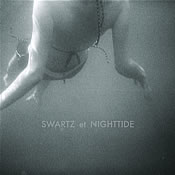 Talk about a lucky kid. Steve Swartz’s daughter was one of the first to hear the ambient guitar work that would eventually come to fill his first solo CD, Nighttide. Of course, at the time he was just trying to get her to go to sleep by playing softly in her room, but that’s what got him started. From there came the experiments in drawing unique sounds out of the guitar, whether by hammering on it or letting fan-blown curtains sweep across the strings. However Swartz went about it, the end result is a set of gauzy grey drones which he layers deeply while prodding the surface gently with recognizable touches of guitar for a nicely worked contrast. The pieces here retain their original soporific capabilities throughout, but Nighttide is certainly more than a set of day’s-end lullabies for grown-ups. While there is an overall warmth to Swartz’s tones, there are also touches of darkness hovering at the edges, sometimes passing over briefly like heavy clouds. What truly makes this disc work, however, is the power of nuance. It’s everywhere, and it’s beautifully done. You hear it in the three simple bass notes that restate themselves across the wash of “Dinghy”; in the way a picked melody in “It Glimmers Through the Snow” slowly fades beneath a rising soundfog, only to re-emerge at the end, a circle completed; in the struck tremolo chords that give “Mid-Day Bells” its sonic identity. There’s something in every track that gingerly but effectively asserts itself against the density of Swartz’s processed guitar. It’s a very soothing disc, to be sure, but Swartz gives you a lot to be aware of, peripherally speaking, while you’re drifting along. It demands, deserves and rewards all the attention you give it. Put it on repeat immediately. Nighttide is a Hypnagogue Highly Recommended CD.
 I will admit that after my initial listens to Morben, the debut CD from Aspectee, I was ready to dismiss it as a straightforward dark ambient piece, a dense assault of drones and rough textures in a big, depressing, amorphous mass. But through repeated listens I came to appreciate it more as a thoughtfully constructed balance of smooth and harsh, a darkness that, while not evenly offset with light, gives way to it in time, the whole thing creating a cohesive thought-line and a richly immersive listening experience. The dark here is quite dark, as oppressively so as in any decent dark ambient I’ve heard lately, packed with sawblade edges and an inherent challenge to the listener. The reason it works lies in the soft warmth of Aspectee’s underlying pads. Taken on their own, they’d make a pretty fine ambient CD. Squared off against the roughened, rasping textures that dominate the disc, the combination comes away stronger for it. “Dianthus” is one of the best examples, crackling with lost-transmission static, laced with dissonant tones and aggressively layered–but hiding beneath is a smooth drone forming a solid sonic bedrock. Hear it again in the title track, where Aspectee goes his furthest in creating grim abstraction–a near crash-dive that he pulls out of courtesy of warbling drones and an effortless tonal shift. Morben ends with the calming washes of “Unwic,” a way to let you come back to yourself after your immersion in the disc. I quite like the way this track starts off a little edgy, with a hint of dissonance and unease, but soon resolves itself into a more soothing pulse and flow.
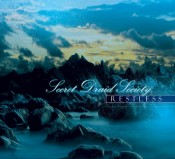 If you’ve heard a dark ambient album before, there will be no surprises forthcoming when you listen to Secret Druid Society’s Restless. All the standards of the genre are here in force: droning bass rumbles that rarely let up, industrial grind, hell-born hisses of demon wind . . . and very little else. There’s no real attempt to break the mold or vary the thick, claustrophobic flow that dominates the disc other than a short span of lighter ambient sound late in “Dawn Over the Deserted World.” Even the densest of drone-based works needs to do something to hold the listener’s attention, and it’s just not happening here.
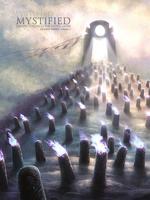 Death is one of those classic bits of inspiration that most artists touch on in one way or another eventually. On his latest CD, Passing Through the Outer Gate, Mystified offers his musical interpretation of a personal moribund journey–his own. As part of the “Eulogy Series” from First Fallen Star, artists are invited to create a vision of their own death and…well, whatever they feel comes after. Passing… skirts the edges of the thematic grimness at hand, focusing more on the drama of crossing over in a blend of almost-dark ambient and thundering neo-classical constructs. Unfortunately, it comes off just a bit uneven to me and, at times, even a touch forced. It could be that I’ve come to expect more subtlety from Mystified and this heavier hand leaves me wanting more of that approach, but I was never able to get comfortable with this disc despite a number of listens. There are certainly moments and passages where I found myself engaged in Mystified’s ideas, but it was never a sustained interest. Samples are available at the label and, as always, I recommend readers check those out to see if Passing… is more their style.
 Hypnagogue Music Reviews